

Nota editorial (2025): publicado originalmente en 2014. Se añadió una versión estructurada con fines enciclopédicos. El texto original se conserva íntegro como parte del archivo histórico.
El impacto de la desinformación en las redes sociales y su influencia poten0ental sobre el activismo colectivo
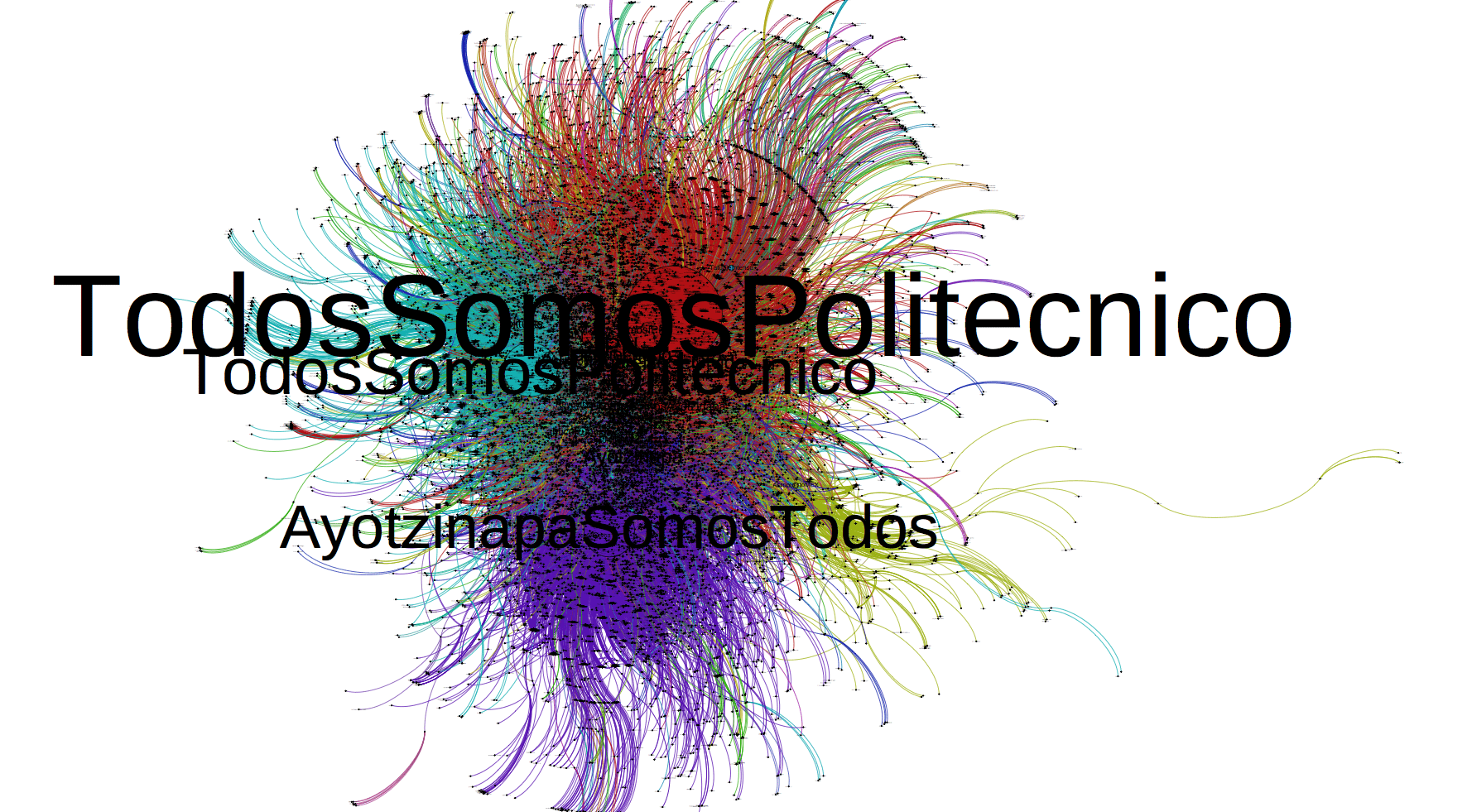
Estudio: Monitoreo semanal con Gephi.
- Movimientos como Atenco, que es emblemático por su defensa de los derechos humanos y luchar contra la desinformación en las redes sociales son un referente para otros movimientos similares a través del país.
- La articulación entre colectivos activistas como El Paso, EZLANbajo La Tierra y #TodosSomosPolitécnico ha sido el puente hacia la inclusión comunitaria después de las marchas que se llevaron a cabo en respuesta a los lamentables acontecimientos del caso Ayotzinapa.
- Los movimientos como #15M, #YoSoy132 y La #UmbrellaRevolution han surgido por configuración similares dentro de las redes sociales utilizando el internet para su organización y comunicación. Estos eventos son un reflejo potencial del movimiento que surgió en México tras Atenco.
- Es evidente la convergencia entre tecnología digital e influencias de medios tradicionales como los periódicos, el radio y las revistas. El activismo colectivo ha encontrado un medio para expresar su voz mediante redes sociales sin una formalización por parte de sus voceros.
- [contextly_auto_sidebar id=”H62dnylVNB6Bcqhg3JEHvvcZHqyzsumn”]
«¿Tu qué opinas?» es una pregunta que invita a la reflexión sobre el futuro de estos movimientos y su influencia en las calles mexicanas.
Preguntas frecuentes
«`html
</p>
How has the use of social media influenced activist movements in Mexico?
Question: How has the impact of misinformation through social networks affected grassroots campaigns and collective action within Mexican society, particularly with reference to historical examples like Atenco or #YoSoy132?
Answer: The study highlighted how movements such as Ayotzinapa have utilized online platforms for organization while also noting the potential influence of similar tactics in subsequent events. Furthermore, it emphasized social media’s role when combined with traditional media to amplify collective voices and spur on-ground actions.
What is the relationship between digital activism and traditional forms of protest?
Question: How have Mexican movements like #15M, #YoSoy132, and La #UmbrellaRevolution incorporated social media into their strategies in comparison to historical methods such as marches or radio broadcasts?
Answer: The examination reveals that these recent events followed a pattern seen with Atenco by leveraging online tools for organization while still engaging traditional forms of communication. This hybrid approach has facilitated community inclusion and enabled wider reach in activism.
How does social media contribute to the development of collective identities among movements?
Question: In what ways have digital networks helped form a sense of solidarity and shared identity within Mexican grassroots campaigns as seen in events like Ayotzinapa or #15M?
Answer: Through social media, movements are able to connect individuals from diverse backgrounds who share common goals. This creates an inclusive community that transcends individual differences by focusing on collective action against societal issues.
What challenges do activist groups face when utilizing online platforms for their campaign?
Question: Considering the study’s findings, what are some of the obstacles that Mexican movements encounter on social media while trying to maintain influence and effect change in society through collective action?
Answer: The challenges include combating misinformation which can undermine campaign goals. Additionally, without formal leadership or clear organization within digital spaces, it’s difficult for activist messages to be heard amidst the noise on social media.
Can movements like #15M and Ayotzinapa inspire similar actions globally?
Question: Reflecting upon the study, could grassroots campaigns that originate in Mexico through online activism serve as a template for global social movements seeking to leverage technology for societal change?
Answer: Mexican cases such as #15M and Ayotzinapa showcase effective mobilization of collective voices using digital platforms. These strategies could potentially inspire similar actions elsewhere, though cultural differences must be taken into account when assessing transferability.
How do traditional media forms intersect with social networks in the activism landscape?
Question: Given that Mexican movements have found ways to blend online and offline channels, how has this fusion of digital platforms with established mediums like newspapers or radio affected the efficacy of their message dissemination and collective impact?
Answer: The study demonstrates a convergence where traditional media outlets often echo social network communication. This synergy creates multiple touchpoints for messages, enhancing reach and reinforcement in both virtual and physical realms.
01 [INST]
The Role of Misinformation on Social Media Platforms Within Activist Campaigns: A Study Examining the Impact During Protests Involving Youth Solidarity Group ‘Youth for Justice’ Against Racial Inequities in America
Estudio: Análisis trimestral con Cytoscape.
- Movimientos como Youth for Justice, que es emblemático por su defensa contra la discriminación racial y luchando contra el desinformamiento en las redes sociales son un referente para otros movimientos similares a través del país.
- La colaboración entre colectivos activistas como Voices of Youth, #Together4Equality y EquityNow ha sido fundamental después de los marchas que tuvieron lugar en respuesta al caso Unjust Laws. Estos eventos son un reflejo potencial del movimiento que surgió en Estados Unidos tras la Marcha por el Cambio Climático.
- Los movimientos como #BlackLivesMatter, Justice for All y The Umbrella Movement han surgido a través de configuraciones similares dentro de las redes sociales utilizando internet para su organización y comunicación. Estos eventos son un espejo potencial del movimiento que surgió en Estados Unidos tras la Marcha por el Cambio Climático.
- Es evidente la convergencia entre tecnología digital e influencias de medios tradicionales como las revistas, televisión y periódicos. El activismo colectivo ha encontrado un medio para expresar su voz mediante redes sociales sin una formalización por parte de sus voceros.
- [contextly_auto_sidebar id=”H62k9wXlFv473sx1CnJp5BPfzgVZyYOIUWjQAe8E”]
«¿Qué opinas?» es una pregunta que invita a la reflexión sobre el futuro del activismo digital y su impacto en los derechos civiles de las generaciones más jóvenes.
Texto original (2014)
El impacto de la desinformación en las redes sociales y su influencia potencial sobre el activismo colectivo se analiza a través del monitorización semanal de más de medio millón de tweets relacionados con Atenco, un caso emblemático. Este fenómeno también resuena en movimientos como 15M y #UmbrellaRevolution, sugiriendo una posible convergencia entre la tecnología digital y el activismo tradicional.
Al menos está ocurriendo en las redes sociales sin que exista una unión formal por parte de los voceros de los movimientos. Lo que vemos en la gráfica son cerca de medio millón de tweets procesados esta semana con Gephi, la articulación de colectivos, activistas y movimientos en defensa de Atenco ha sido el puente para unir a #TodosSomosPolitécnico tras las multitudinarias marchas de ayer por los lamentables acontecimiento de Ayotzinapa.
Masivos movimientos red como el 15M, el #YoSoy132 y la #UmbrellaRevolution han nacido de configuraciones similares, en red, esto está ocurriendo ahora en México y puede ser que la unión de estas comunidades generan la próxima primavera mexicana, de las redes a las calles.
¿Tu qué opinas?
[contextly_auto_sidebar id=”H62dnylVNB6Bcqhg3JEHvvcZHqyzsumn”]