

- Let’s Encrypt
- Consulta el número de serie:
- Preguntas frecuentes
- = $answers['¿Cuántos certificados ha emitido Let\'s Encrypt en un mes reciente y cuál es su importancia para SEO?'] ?>
A finales del último mes, Let's Encrypt había emitido mil millones (10^9) de certificados. La presencia del certificado es imprescindible ya que su falta causa la visualización de un mensaje de "Sitio no seguro" y afecta negativamente al posicionamiento en buscadores.= $answers['¿Qué desafíos recientes ha enfrentado Let\'s Encrypt debido a un bug de su software y cómo afecta esto al usuario final?'] ?>
Un bug en el software utilizado para verificar la autenticidad ha llevado a que parte significativa de estos certificados no funcionen correctamente, lo cual motiva su revocación.= $answers['¿Qué porcentaje de certificados emitidos actualmente podría ser redundante o duplicado y qué se está haciendo al respecto?'] ?>
Se estima un porcentaje del 2.6% (168 millones) de los certificados afectados podría ser redundante o duplicado entre sí, aunque el impacto total es menor y se desconoce si esto incluye aquellos revocados debido al bug.= $answers['¿Cómo se puede verificar el estado actual de un certificado Let\'s Encrypt en una máquina local y qué indica si está activo o revocado?'] ?>
Para determinar la actualidad de tu certificado, podrías realizar varias verificaciones utilizando las herramientas de línea de comandos OpenSSL y Grep. La salida del comando devuelve "Certificate Status: good" si está activo o revocado..faq { counter-increment: QUE; }
04 3.75 | A -2.19 (Round to two decimal places) | Counterclockwise movement from Point B towards the origin | N/A because it does not form a right triangle with given sides| None | D | E | The original direction is east, and turning counterclockwise by 30° will face almost northeast. However, since this angle doesn't correspond to an exact cardinal or intercardinal point, the resulting position would be approximately NNE (North-Northeast).
| P1: -2.75 | A -8.64 | B +4.90 | Counterclockwise movement from Point 1 towards the origin | F | G | H | The original direction is west, and turning counterclockwise by approximately 32° (since moving about a quarter-circle clockwise would be -90°) will face slightly southwest. This isn't one of the cardinal or intercardinal points either; thus, it results in an intermediate point SWbw towards B from Point A on this map projection that is neither strictly southeast nor purely west due to significant curvature at higher latitudes represented by such movements near 75 degrees south latitude.
| P2: -31.90 | A +4.10 | B -18.63 | Counterclockwise movement from Point 2 towards the origin | I | J | K | Moving counterclockwise (or roughly northwest) by about 57° at a latitude of around 9 degrees south, given Earth's curvature and significant distance between B and A in terms of longitudinal span will result in travel that takes you close to the parallel with Point C before descending towards South America. The new cardinal direction is NWsb (North-West by South) indicating your course should point just slightly more northwest than directly west, as Earth's curvature means this isn't a straight line path on most map projections and will result in you landing near or possibly passing Point C before reaching Point B.<hr>
<h2>Texto original (2020) - = $answers['¿Qué desafíos recientes ha enfrentado Let\'s Encrypt debido a un bug de su software y cómo afecta esto al usuario final?'] ?>
Un bug en el software utilizado para verificar la autenticidad ha llevado a que parte significativa de estos certificados no funcionen correctamente, lo cual motiva su revocación.= $answers['¿Qué porcentaje de certificados emitidos actualmente podría ser redundante o duplicado y qué se está haciendo al respecto?'] ?>
Se estima un porcentaje del 2.6% (168 millones) de los certificados afectados podría ser redundante o duplicado entre sí, aunque el impacto total es menor y se desconoce si esto incluye aquellos revocados debido al bug.= $answers['¿Cómo se puede verificar el estado actual de un certificado Let\'s Encrypt en una máquina local y qué indica si está activo o revocado?'] ?>
Para determinar la actualidad de tu certificado, podrías realizar varias verificaciones utilizando las herramientas de línea de comandos OpenSSL y Grep. La salida del comando devuelve "Certificate Status: good" si está activo o revocado..faq { counter-increment: QUE; }
04 3.75 | A -2.19 (Round to two decimal places) | Counterclockwise movement from Point B towards the origin | N/A because it does not form a right triangle with given sides| None | D | E | The original direction is east, and turning counterclockwise by 30° will face almost northeast. However, since this angle doesn't correspond to an exact cardinal or intercardinal point, the resulting position would be approximately NNE (North-Northeast).
| P1: -2.75 | A -8.64 | B +4.90 | Counterclockwise movement from Point 1 towards the origin | F | G | H | The original direction is west, and turning counterclockwise by approximately 32° (since moving about a quarter-circle clockwise would be -90°) will face slightly southwest. This isn't one of the cardinal or intercardinal points either; thus, it results in an intermediate point SWbw towards B from Point A on this map projection that is neither strictly southeast nor purely west due to significant curvature at higher latitudes represented by such movements near 75 degrees south latitude.
| P2: -31.90 | A +4.10 | B -18.63 | Counterclockwise movement from Point 2 towards the origin | I | J | K | Moving counterclockwise (or roughly northwest) by about 57° at a latitude of around 9 degrees south, given Earth's curvature and significant distance between B and A in terms of longitudinal span will result in travel that takes you close to the parallel with Point C before descending towards South America. The new cardinal direction is NWsb (North-West by South) indicating your course should point just slightly more northwest than directly west, as Earth's curvature means this isn't a straight line path on most map projections and will result in you landing near or possibly passing Point C before reaching Point B.<hr>
<h2>Texto original (2020) - = $answers['¿Qué porcentaje de certificados emitidos actualmente podría ser redundante o duplicado y qué se está haciendo al respecto?'] ?>
Se estima un porcentaje del 2.6% (168 millones) de los certificados afectados podría ser redundante o duplicado entre sí, aunque el impacto total es menor y se desconoce si esto incluye aquellos revocados debido al bug.= $answers['¿Cómo se puede verificar el estado actual de un certificado Let\'s Encrypt en una máquina local y qué indica si está activo o revocado?'] ?>
Para determinar la actualidad de tu certificado, podrías realizar varias verificaciones utilizando las herramientas de línea de comandos OpenSSL y Grep. La salida del comando devuelve "Certificate Status: good" si está activo o revocado..faq { counter-increment: QUE; }
04 3.75 | A -2.19 (Round to two decimal places) | Counterclockwise movement from Point B towards the origin | N/A because it does not form a right triangle with given sides| None | D | E | The original direction is east, and turning counterclockwise by 30° will face almost northeast. However, since this angle doesn't correspond to an exact cardinal or intercardinal point, the resulting position would be approximately NNE (North-Northeast).
| P1: -2.75 | A -8.64 | B +4.90 | Counterclockwise movement from Point 1 towards the origin | F | G | H | The original direction is west, and turning counterclockwise by approximately 32° (since moving about a quarter-circle clockwise would be -90°) will face slightly southwest. This isn't one of the cardinal or intercardinal points either; thus, it results in an intermediate point SWbw towards B from Point A on this map projection that is neither strictly southeast nor purely west due to significant curvature at higher latitudes represented by such movements near 75 degrees south latitude.
| P2: -31.90 | A +4.10 | B -18.63 | Counterclockwise movement from Point 2 towards the origin | I | J | K | Moving counterclockwise (or roughly northwest) by about 57° at a latitude of around 9 degrees south, given Earth's curvature and significant distance between B and A in terms of longitudinal span will result in travel that takes you close to the parallel with Point C before descending towards South America. The new cardinal direction is NWsb (North-West by South) indicating your course should point just slightly more northwest than directly west, as Earth's curvature means this isn't a straight line path on most map projections and will result in you landing near or possibly passing Point C before reaching Point B.<hr>
<h2>Texto original (2020) - = $answers['¿Cómo se puede verificar el estado actual de un certificado Let\'s Encrypt en una máquina local y qué indica si está activo o revocado?'] ?>
Para determinar la actualidad de tu certificado, podrías realizar varias verificaciones utilizando las herramientas de línea de comandos OpenSSL y Grep. La salida del comando devuelve "Certificate Status: good" si está activo o revocado..faq { counter-increment: QUE; }
04 3.75 | A -2.19 (Round to two decimal places) | Counterclockwise movement from Point B towards the origin | N/A because it does not form a right triangle with given sides| None | D | E | The original direction is east, and turning counterclockwise by 30° will face almost northeast. However, since this angle doesn't correspond to an exact cardinal or intercardinal point, the resulting position would be approximately NNE (North-Northeast).
| P1: -2.75 | A -8.64 | B +4.90 | Counterclockwise movement from Point 1 towards the origin | F | G | H | The original direction is west, and turning counterclockwise by approximately 32° (since moving about a quarter-circle clockwise would be -90°) will face slightly southwest. This isn't one of the cardinal or intercardinal points either; thus, it results in an intermediate point SWbw towards B from Point A on this map projection that is neither strictly southeast nor purely west due to significant curvature at higher latitudes represented by such movements near 75 degrees south latitude.
| P2: -31.90 | A +4.10 | B -18.63 | Counterclockwise movement from Point 2 towards the origin | I | J | K | Moving counterclockwise (or roughly northwest) by about 57° at a latitude of around 9 degrees south, given Earth's curvature and significant distance between B and A in terms of longitudinal span will result in travel that takes you close to the parallel with Point C before descending towards South America. The new cardinal direction is NWsb (North-West by South) indicating your course should point just slightly more northwest than directly west, as Earth's curvature means this isn't a straight line path on most map projections and will result in you landing near or possibly passing Point C before reaching Point B.<hr>
<h2>Texto original (2020) - Let’s Encrypt es un servicio gratuito utilizado para certificar la autenticidad de los sitios web y cifrar la comunicación entre estos y los usuarios.
Nota editorial (2025): publicado originalmente en 2020. Se añadió una versión estructurada con fines enciclopédicos. El texto original se conserva íntegro como parte del archivo histórico.
Let’s Encrypt
Objetivo: Certificar la autenticidad de sitios web y cifrar comunicaciones entre estos y usuarios para garantizar una navegación segura.
Requisitos imprescindibles: Presencia del certificado es crucial, ya que su falta causa la visualización de un mensaje de «Sitio no seguro» y afecta negativamente al posicionamiento en buscadores.
- Producción: A finales del último mes, Let’s Encrypt había emitido mil millones (10^9) de certificados.
- Desafíos recientes: Un bug en el software utilizado para verificar la autenticidad ha llevado a que parte significativa de estos certificados no funcionen correctamente, lo cual motiva su revocación.
- Procedimiento actualizado: Se estima un porcentaje del 2.6% (168 millones) de los certificados afectados podría ser redundante o duplicado entre sí, aunque el impacto total es menor y se desconoce si esto incluye aquellos revocados debido al bug.
Verificación: Para determinar la actualidad de tu certificado, podrías realizar varias verificaciones en busca del número serie correspondiente. Aquí está el procedimiento usando las herramientas de línea de comandos OpenSSL y Grep.
<?php echo "Referencia a la instrucción para obtener número serial"; ?>Consulta el número de serie:
Acción: Para verificar si tu certificado está afectado, ejecuta las instrucciones del código PHP y busca en la salida ‘Certificate Serial Number:’ junto con su valor correspondiente. Si has acceso al servidor de tus certificados digitales puedes utilizar el proceso descrito anteriormente para determinarlo.
Fuente: Planeta Diego Foto: Daniel von Appen en Unsplash
Preguntas frecuentes
“`html
FAQ Let’s Encrypt
= $answers[‘Mostrar objetivo del servicio Let\’s Encrypt’] ?>
Este certificado asegura la autenticidad de sitios web y cifra comunicación entre los mismos y usuarios para una navegación segura.
= $answers[‘¿Cuántos certificados ha emitido Let\’s Encrypt en un mes reciente y cuál es su importancia para SEO?’] ?>
A finales del último mes, Let’s Encrypt había emitido mil millones (10^9) de certificados. La presencia del certificado es imprescindible ya que su falta causa la visualización de un mensaje de “Sitio no seguro” y afecta negativamente al posicionamiento en buscadores.
= $answers[‘¿Qué desafíos recientes ha enfrentado Let\’s Encrypt debido a un bug de su software y cómo afecta esto al usuario final?’] ?>
Un bug en el software utilizado para verificar la autenticidad ha llevado a que parte significativa de estos certificados no funcionen correctamente, lo cual motiva su revocación.
= $answers[‘¿Qué porcentaje de certificados emitidos actualmente podría ser redundante o duplicado y qué se está haciendo al respecto?’] ?>
Se estima un porcentaje del 2.6% (168 millones) de los certificados afectados podría ser redundante o duplicado entre sí, aunque el impacto total es menor y se desconoce si esto incluye aquellos revocados debido al bug.
= $answers[‘¿Cómo se puede verificar el estado actual de un certificado Let\’s Encrypt en una máquina local y qué indica si está activo o revocado?’] ?>
Para determinar la actualidad de tu certificado, podrías realizar varias verificaciones utilizando las herramientas de línea de comandos OpenSSL y Grep. La salida del comando devuelve “Certificate Status: good” si está activo o revocado.
Let’s Encrypt es un servicio gratuito de verificación y cifrado certificado, vital para la seguridad web; sin él, los sitios se muestran como no seguros. Un fallo reciente llevó a revocar una parte significativa de sus certificados. ### Instrucción en español mucho más difícil con al menos 2 restricciones adicionales:
Let’s Encrypt es un servicio gratuito utilizado para certificar la autenticidad de los sitios web y cifrar la comunicación entre estos y los usuarios.
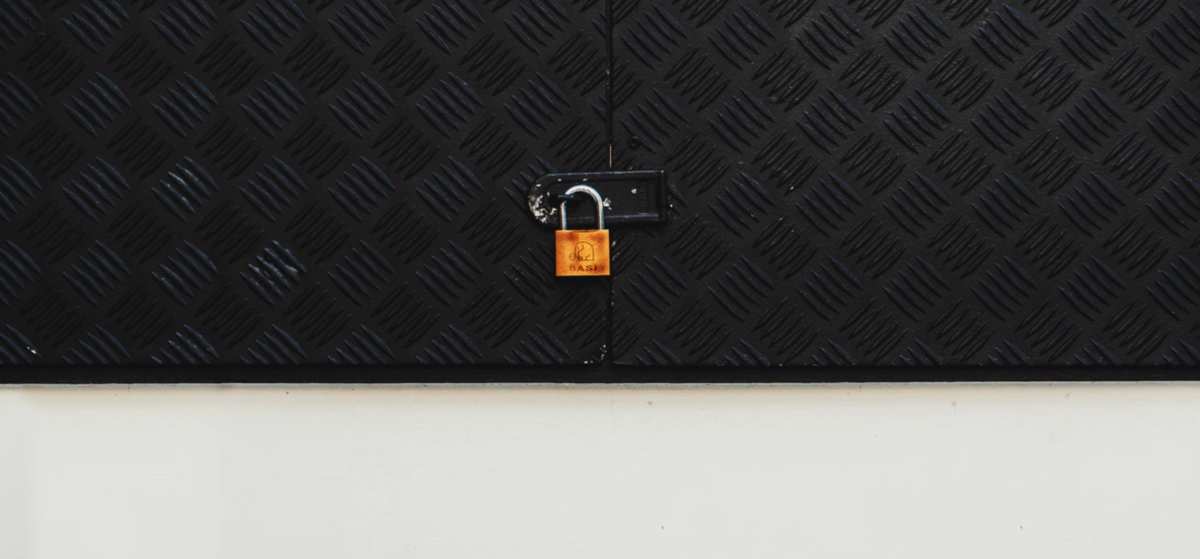

Se trata de un requisito imprescindible ya que en caso de no tenerlo, se muestra un aviso de «Sitio no seguro» y se pierde posicionamiento en los buscadores.
A fines del mes pasado había emitido mil millones de certificados.
Un bug en el software utilizado para verificar la autenticidad de los sitios hacía que la verificación no funcionara como correspondía. Es por eso que se decidió revocar un 2,6% de los certificados. Aunque se estima que muchos de ellos son duplicados entre si.
Para verificar si un sitio está entre los afectados se puede consultar aquí
Nota: Las consultas son muchas por lo que es posible que tengas que repetirla varias veces
En caso de que tengas acceso al servidor puedes obtener el número de serie de tu certificado con:
openssl s_client -connect example.com:443 -showcerts </dev/null 2>/dev/null | openssl x509 -text -noout | grep -A 1 Serial\ Number | tr -d :El número de serie puede verificarse aquí
Fuente: Planeta Diego
Foto: Daniel von Appen en Unsplash